
Hand Held Radiation Monitor | Godrej Security Solutions

Detect, identify and locate radiation threats from a single 180 g device
Radiation cannot be seen, smelled or felt. The only way a security officer, customs inspector or plant engineer knows a source is present is the instrument in their hand. That makes the detector one of the most important pieces of equipment a frontline team carries.
The Godrej Hand Held Radiation Monitor is built for exactly that moment. It detects all five major types of ionising radiation, tells you which radioactive isotope is likely present, tags each event with its GPS location, and does it all in a device weighing just 180 g that runs for up to 300 hours on two ordinary AA batteries.
In this guide, we walk through every feature of the monitor, explain what each one means in the field, and show how teams in defence, policing, customs, airports and oil and gas put it to work.
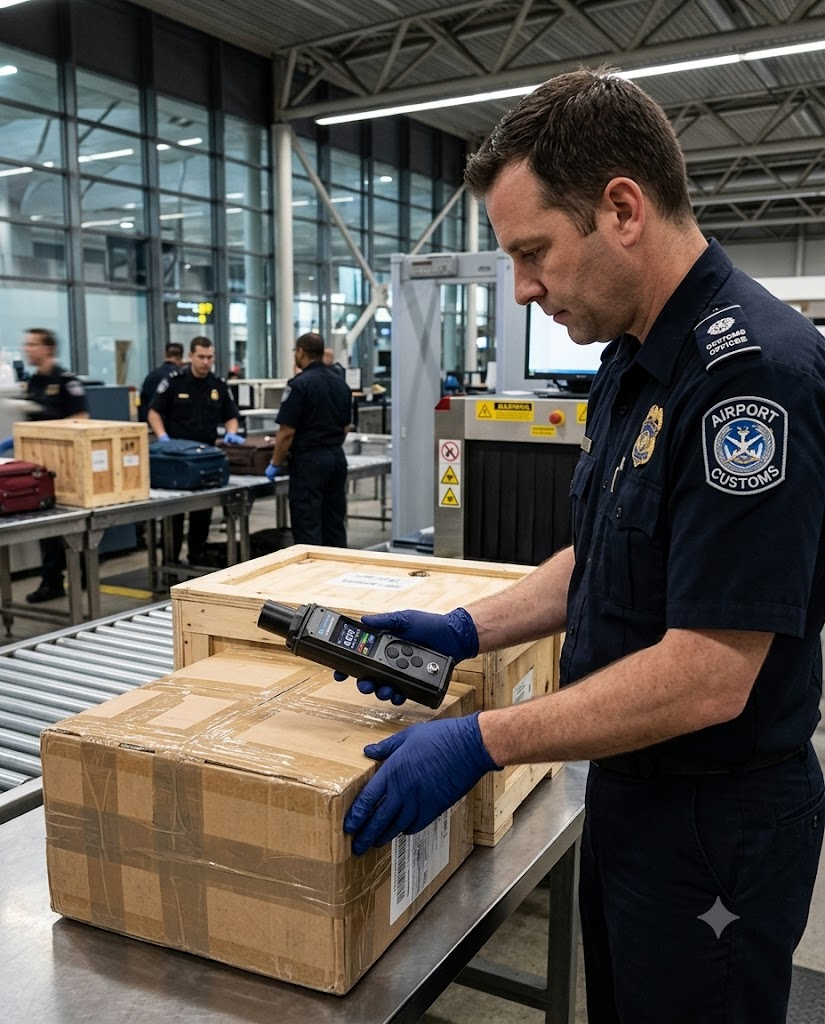
The monitor at a glance
Parameter | Specification |
Radiation detected | Gamma, X-ray, alpha, beta and neutron |
Identification | Built-in radionuclide identification algorithm |
Weight | 180 g (6.4 oz) |
Power | 2 x AA batteries |
Battery life | Up to 300 hours |
Data memory | Up to 500 events and 100 gamma spectra |
Location tagging | Built-in GPS |
Ingress protection | IP65 (dust-tight, water-jet resistant) |
Operating temperature | -20°C to +50°C |
Key sectors | Defence, police and paramilitary, customs and borders, airports, oil and gas / PSUs |
Key features, explained
1. Detects gamma, X-ray, alpha, beta and neutron radiation
Most basic dosimeters see only gamma and X-rays. This monitor covers all five types of ionising radiation, so one device replaces a kit of single-purpose meters.
Each type behaves differently, which is why full coverage matters:
Gamma and X-rays are high-energy electromagnetic waves. They travel far and pass through clothing, bags and thin metal, making them the most common signal when screening people, vehicles and cargo.
Alpha particles are heavy and travel only a few centimetres in air. They are stopped by a sheet of paper, so they are usually found as surface contamination on hands, tools or equipment.
Beta particles are fast electrons that penetrate further than alpha but are blocked by a few millimetres of plastic or aluminium. They are key to contamination checks.
Neutrons carry no electrical charge and are hard to shield. A neutron signal can indicate special nuclear material, which is why neutron detection is valued in border and defence security.
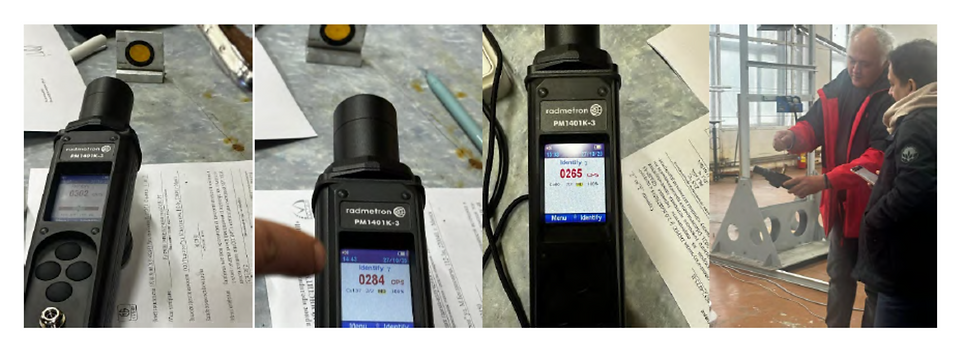
With all five channels in one instrument, the operator does not have to guess in advance what kind of source they might meet.
2. Built-in radionuclide identification algorithm
Detecting radiation tells you something is there. Identifying the radionuclide tells you what it is, and that changes the response.
The monitor analyses the energy pattern (spectrum) of incoming gamma radiation and matches it against known isotope signatures. This helps the operator separate:
Naturally occurring radioactive material (NORM), such as that found in ceramic tiles, granite, fertilisers or some foods, which commonly sets off simple alarms.
Medical isotopes, for example in a traveller who has recently undergone a nuclear medicine scan.
Industrial sources, used in radiography, well logging and gauges.
Sources of genuine security concern, which call for escalation.
The practical benefit is fewer false alarms, faster decisions and less disruption at busy checkpoints.
3. Battery life up to 300 hours on 2 x AA batteries
The monitor runs on two standard AA batteries and lasts up to 300 hours. That is more than 12 days of continuous operation, or many weeks of shift-based use.
Standard AA cells are available almost anywhere, from a border outpost to a remote field site. Teams do not depend on proprietary battery packs or a charging point, which is critical during long deployments and emergencies.
4. Stores up to 500 events and 100 gamma spectra
Every alarm or measurement can be saved as an event, and the device holds up to 500 of them. It can also store up to 100 full gamma spectra, the raw energy data behind each identification.
This gives teams:
A record for reporting and audit, showing what was found, when and at what level.
Data for expert review, as stored spectra can be checked later by a radiation specialist to confirm or refine an identification.
Support for investigations, with an evidence trail for incidents at borders, ports or sites.
5. Rugged and waterproof (IP65), operating from -20°C to +50°C
The IP65 rating means the enclosure is fully protected against dust (the "6") and resists low-pressure water jets from any direction (the "5"). In practice, the monitor can be used in rain, dust storms, sea spray at ports and dirty industrial environments.
The -20°C to +50°C operating range covers the extremes Indian users face, from high-altitude winter posts in the Himalayas to desert borders and refinery yards in peak summer.
6. Built-in GPS for event location tagging
Each recorded event can be stamped with its GPS coordinates. When a team is surveying a large area, such as a port terminal, rail yard, pipeline route or disaster zone, this shows exactly where each reading was taken.
Location-tagged data helps responders map contamination, return to a hotspot, and share precise information with command centres and regulators.
7. World's lightest hand-held multi-radiation identifier
At 180 g (6.4 oz), the monitor weighs less than most smartphones. It fits in a pocket or belt holster and can be carried through an entire shift without fatigue.
Low weight matters for patrol officers, customs staff on their feet all day, and response teams who already carry heavy gear. A detector that is easy to carry is one that actually gets carried.
Designed for one-handed use
The catalogue images show a compact, ergonomic body with a colour display and a simple button layout. Readings are shown clearly on screen, with a colour-coded indicator for quick status checks, so the operator can scan and read results with one hand.
What the specifications mean in the field
Each headline specification answers a practical question a buyer or operator will ask.
Specification | Question it answers | Why it matters |
Weight: 180 g (6.4 oz) | Will officers actually carry it? | Pocket-sized; no fatigue over a full shift |
Battery: up to 300 hours on 2 x AA | Will it run when we need it? | Long deployments without charging; batteries available anywhere |
Detection: gamma, X-ray, alpha, beta, neutron + radionuclide ID | Can one device handle any source? | Replaces several single-purpose meters and identifies the isotope |
Operating temperature: -20°C to +50°C | Will it work at our location? | Covers mountain posts, deserts and industrial plants |
IP65 enclosure | Can it survive rough use? | Dust-tight and resistant to water jets |
Memory: 500 events, 100 spectra | Can we prove what we found? | Built-in record for reporting, audit and expert review |
GPS | Where exactly was the reading? | Precise mapping of hotspots and incidents |
Applications across sectors
The monitor is designed for five user groups that face radiation risk as part of their daily work.
Defence
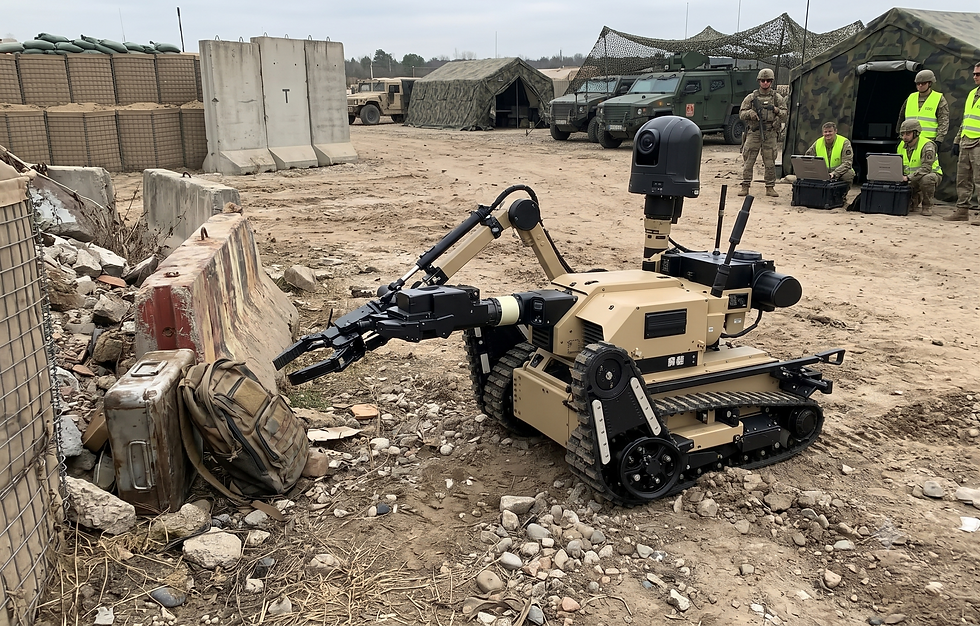
Armed forces need to detect and identify radiological and nuclear threats quickly, often in harsh terrain. Neutron detection, isotope identification and the wide temperature range make the monitor suited to CBRN (chemical, biological, radiological and nuclear) reconnaissance, base security and field survey. Its 180 g weight means it adds almost nothing to a soldier's load.
Police and paramilitary
Police and paramilitary forces secure public events, VIP movements and critical infrastructure. Officers can carry the monitor discreetly on patrol and use it to screen suspicious packages or vehicles. Radionuclide identification helps them tell a harmless medical or natural source from a real threat on the spot, without halting an operation.
Customs and border radiation screening
Borders, seaports and land crossings are the frontline against illicit trafficking of radioactive material. Fixed portal monitors often flag a vehicle or container; the handheld monitor is then used for secondary inspection to locate the source and identify it. GPS-tagged events and stored spectra give customs teams documented evidence for each case.
Airports
Airport security teams screen large numbers of passengers, baggage and cargo every day. Passengers who have recently had nuclear medicine treatment are a common cause of alarms. Identifying the isotope lets staff resolve these cases quickly and politely while staying alert to genuine threats.
Oil and gas and PSUs
Oil and gas operations can bring naturally occurring radioactive material to the surface, where it builds up as scale and sludge in pipes, tanks and equipment. Industrial radiography and gauges also use sealed sources. The monitor helps plant and safety teams check equipment before maintenance or disposal, survey work areas, and protect workers. The IP65 rating suits refinery, offshore and pipeline environments.
Why choose the Godrej Hand Held Radiation Monitor
One device, five radiation types: gamma, X-ray, alpha, beta and neutron detection in a single instrument.
Answers, not just alarms: built-in radionuclide identification reduces false alarms and speeds up decisions.
Built to be carried: 180 g, pocket-sized and comfortable for a full shift.
Ready for long deployments: up to 300 hours on 2 x AA batteries.
Evidence built in: 500 events, 100 gamma spectra and GPS location tags.
Tough enough for Indian conditions: IP65 protection and a -20°C to +50°C operating range.
Frequently asked questions
What types of radiation can the monitor detect? It detects gamma, X-ray, alpha, beta and neutron radiation.
Can it identify the radioactive source? Yes. A built-in radionuclide identification algorithm analyses the gamma spectrum to indicate which isotope is likely present.
How long does the battery last? Up to 300 hours on two standard AA batteries.
How much data can it store? Up to 500 events and 100 gamma spectra, with GPS location tagging for each event.
Can it be used outdoors and in bad weather? Yes. It has an IP65 rating for dust and water-jet protection and operates from -20°C to +50°C.
How heavy is it? It weighs 180 g (6.4 oz).
Who is it designed for? Defence forces, police and paramilitary units, customs and border agencies, airport security, and oil and gas companies and PSUs.




Comments