
Poody Lounge Chair | Godrej Interio
- 9to5 Spaces

- Jun 10
- 6 min read

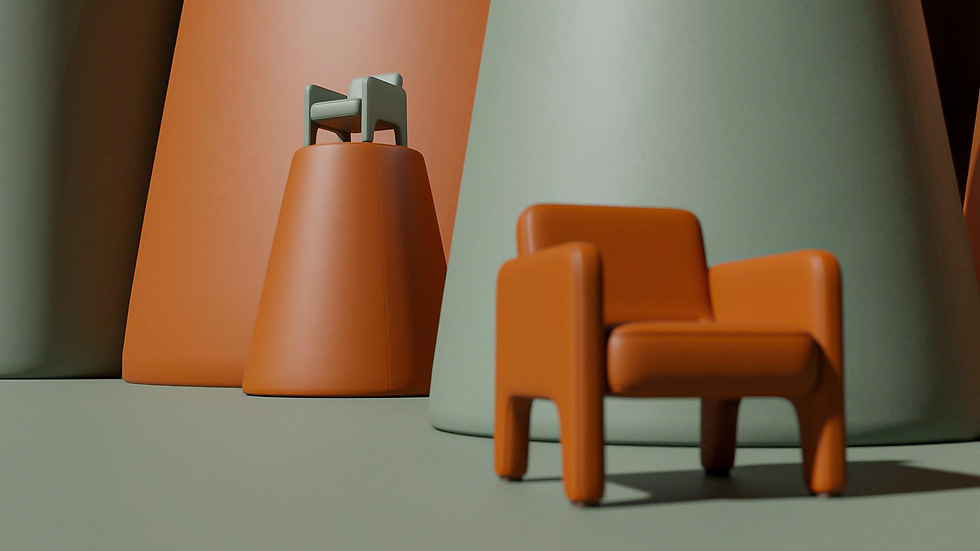
Godrej Poody Lounge Chair | A single material hugs every gracious curve of this monolithic chair, keeping it simple and endearing. A well tailored fit with just the right comfort make every sitting a worth while experience.

USP
Distinctive Sculptural FormA bold and modern silhouette that makes a statement in any setting.
Comfort-Focused Lounging SeatingDesigned for relaxation, offering comfortable seating
Fully Upholstered BodySeamless fabric coverage for a plush, cohesive look and luxurious feel.

Chair Details:
· Understructure: Upholstered wooden structure is made up of ply and pinewood.
· Upholstery: Upholstery is made up of Syn Lth.
2. Assembly: The chair comes in one piece, so no assembly is required at customer end.
3. Packet: Each packet contains one assembled chair.
4. Shade : 1) Mint
2) Cinnamon

COMFORT WRINKLES
As you settle into your new fabric or leather upholstery, "comfort wrinkles" will begin to appear. This is a natural part of the upholstery maturing process.
Comfort Wrinkles are caused by many things. They are normal in upholstered furniture that is designed to have soft seating and back support. The type of covering and filling has a significant role reducing comfort wrinkles.
The standard foam seat cushion is constructed with an inner core of high density, high resiliency premium urethane foam sometimes between thick layers of resilient polyester fiber. Loose back pillows are filled with 100% polyester fiber. This is the same material used to fill high quality bed pillows. Like bed pillows, furniture cushions must be hand fluffed and turned frequently to maintain a soft, well filled appearance.
The soft and comfortable cushions and pillows used with better quality furniture will provide years of lasting service if properly maintained. Fabrics and leathers that provide flexibility combined with filling materials that compress softly, provide the best comfort benefits. These same features also create Comfort Wrinkles in cushions and pillows that are characteristic of the construction and should not be considered as defect.
For further clarity refer above Fig 1 which showcases a lot of wrinkles in the cushion when gently pressed by hand. This is the same cushion which is generally used in sleeping pillows. The super soft ness of the loose fiber fills lead to collapse of the pillow fibers which provides sink-in comfort. However, this also means the collapsed pillow fibers do not recover to its original state. Hence relatively speaking more the wrinkles more the softness of the cushions. In Fig 2 there are almost no wrinkles because the material used in the cushion is polyurethane foam. The cells collapse only in the area where hand is pressing the cushion with no scope for wrinkles getting created. In this case even though the cushion is soft with no wrinkles, it is not as comfortable or soft as the fiber filled cushion in Fig 1.
Some fabrics and leathers will show Comfort Wrinkles when the cushion casings are originally filled. Most fabrics will develop wrinkles with use. The more flexible fabrics will generally develop more wrinkles.
Longer cushions tend to wrinkle more readily than narrow cushions. One-piece sofa or love seat cushions will develop comfort wrinkles more quickly than two- or three-piece cushions regardless of the fabric. The larger expanse a fabric covers, the less support there is to stabilize it, allowing for more deflection of the fabric. In thicker cushion cores, softer foam is used to achieve the desired comfort. However, when filling cushions, these softer cores do not allow as much push from front to back and side to side, thus permitting more wrinkles to occur.
The tighter a fabric is woven, the less it will breathe. The less a fabric breathes, the firmer the product will sit. The firmer it sits. The less it will wrinkle. Therefore the same style in two different fabrics will sit differently. Latex backed fabrics will help eliminate wrinkles in the fabric but will alter seating comfort and the appearance of softness.
Even when using the highest quality foam and fiber wrap available, there will, over time, be a loss in loft in the fiber wrap and a slight loss of compression strength in the foam. These factors added to the fact that fabrics stretch and lose some of their recovery properties, result in comfort wrinkles. Fluffing and stroking cushions regularly, along with reversing them, will reduce the amount of wrinkles and aid the fabric in wearing better.
Even though the materials used by us are of highest quality, they can be different because of their fiber content, construction, wear ability and stretch ability. All materials are tested to meet our high-quality standards.
Climate affects fabric just as it does wood. Heat, cold, humidity and sunlight contribute to fabric instability.
Soil repellent coatings or treatments applied other than in the manufacturing or finishing process may break down the backing of the fabric. It can also react to the cushion cores themselves.
Gaps for Functioning
Please note minor gaps may be visible between the two seats/backs which is intentional to avoid any friction during the operation of recliner. Additionally, you may hear a slight rubbing sound of cushions, which is normal and not indicative of any defect.
UPHOLSTERY PILING
A pill is a small ball of fibers that form on the face of a piece of fabric. It is caused by abrasion on the surface of the fabric and is considered an unsightly occurrence on furniture.
What causes pilling?
Loose fibers have a natural tendency to move to the surface of a piece of fabric, where they are subject to friction. This can cause the fibers to twist together into small balls. Fibers that remain secured to the fabric are also twisted into the ball, so that the pill is then secured to the surface of the material. Friction is caused in the normal course of people using their furniture; rubbing against the surface causes friction. Pilling is more noticeable on man-made fibers. This is mainly because natural fabrics shed loose fibers easily while man-made fibers are notoriously strong, so the pills are anchored strongly to the fabric.
Should I send the fabric back?
It is important to note that pilling is not a fabric defect or fault and is not covered under warranty. It can be compared to the shedding experienced when purchasing new carpet-think about the way carpet behaves when newly installed, as there are constantly new loose fibers coming to the surface over the first few months of use. This is completely normal and will reduce once the excess fibers are gone.
Consumers are sometimes concerned that pilling means that the fabric is wearing away and disintegrating - this is not the case. Pilling is a normal occurrence caused by wear and tear and does not affect the durability or functionality of the fabric. It is easily removable.
How do I remove pilling?
The quickest and most cost-effective approach is to use a battery-operated pill shaver to remedy the situation. These small, easy to use appliances are available If piling reoccurs, it can be simply shaved again. This may occur several times, but the piling will diminish and eventually cease once the excess fibers are removed.
Can I buy fabric that doesn't pill?
Since all fabrics will pill to some extent, the possibility of it happening should not be a main concern when choosing an upholstery fabric.
However, there are fabrics that are less likely to pill. Some are treated or coated during the
manufacturing process to adhere excess fiber to the surface of the fabric. Some are also put through a singeing process, which quickly burns the excess surface fibers away.
Smooth, tightly woven fabrics and fabrics made from tightly twisted yarns are less likely to pill because the fibers are held tightly in the cloth. When a fabric is made from more than one fiber type, where one fiber is strong and one is weak (for example poly cotton blends) piling will be more noticeable, because the weaker fiber wears and breaks, while the stronger fiber holds the pills to the cloth. Ultimately, if you notice that your furniture is developing pills, don't be alarmed. It is easily remedied and does not mean your furniture is made of poor-quality fabric.
Care Instructions
1. Pre-test any cleaning solution
It is advisable to pre-test any cleaning solution on your upholstery for color loss and fabric compatibility.
2. Keep pets off
Keep pets off the furniture. Pet's body oils rub off and are very difficult to remove.
3. Avoid Direct sunlight
To protect your furniture from fading, avoid keeping your furniture next to windows and other places where it be exposed to direct sunlight
4. Regular Cleaning
Cleaning your furniture items regularly will help you maintain them for a long time
5. Avoid Sharp edges
It is important that one carefully protects the upholstery of the chair against sharp objects or objects with sharp edges to prevent tearing of the upholstery
6. Prevention against Mold & Fungus
To prevent the formation of mold and fungus, natural and synthetic surfaces should be stored at room temperature and a humidity of 40-60%. Ensure adequate air circulation is maintained.






Comments